
- Free delivery in Milton Keynes, courier mainland UK £10
- food@naturewayfarm.co.uk
- 01908 314556
No medication. No pesticides. No chemical residues, no additives, nothing hidden. Just animals raised slowly, outdoors, the way they’re meant to be — which is also, it turns out, the way that lets your body actually tolerate them.
Most meat carries more than protein. Antibiotic residue, stress hormones from crowded conditions, chemical wormers, feed additives — and for anyone with histamine intolerance, autoimmune conditions, or a gut that’s already under pressure, that hidden load is often the difference between a meal that nourishes and one that doesn’t sit right.
We raise beef, lamb, pork and chicken without any of it. Not as a claim on a label — as how the animals actually live.
“Meat shouldn't be about a premium label claim. It's what's on the inside that matters.”
Here’s what a lot of people don’t realise until they start asking questions: an animal can be labelled “grass-fed” and still spend its final weeks on grain to fatten it up fast. It can be labelled “free-range” and still be routinely medicated. It can be raised without a single chemical touching its feed and still be trucked long distances, stressed, and processed in ways that change the meat itself.
None of that shows up on the packet. It shows up in how you feel after you eat it — and if you’re one of the growing number of people managing histamine intolerance, an autoimmune condition, or a sensitive gut, you already know this better than most nutritionists do.
We built Nat Way Farm around a simple standard: if we wouldn’t feed it to our own family without hesitation, we don’t sell it. That means slow growth, proper pasture, no shortcuts — and it means we can actually tell you, honestly, what your meat’s life looked like before it reached your plate.

100% grass-fed and grass-finished, organic, moved daily to fresh pasture. No grain finishing, no rushing. The result is meat with genuinely higher omega-3s and vitamin E — and a depth of flavour that comes only from an animal that lived the way it was supposed to.
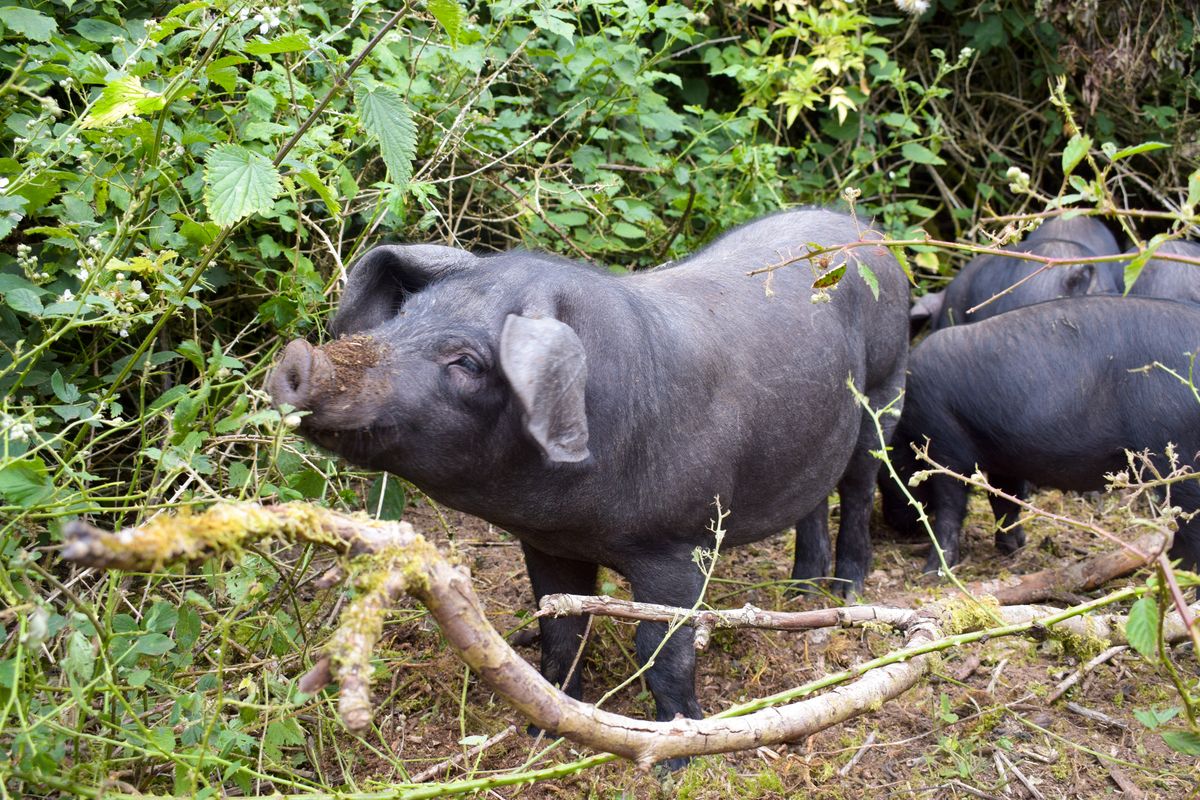
Slow-grown, proper outdoor pigs — ours or sourced from other regenerative farmers that do as we do. They root, forage, and move to fresh range every ten days at most. Restricted, carefully chosen feed, GM-free, soya-free. No shortcuts to speed up growth.
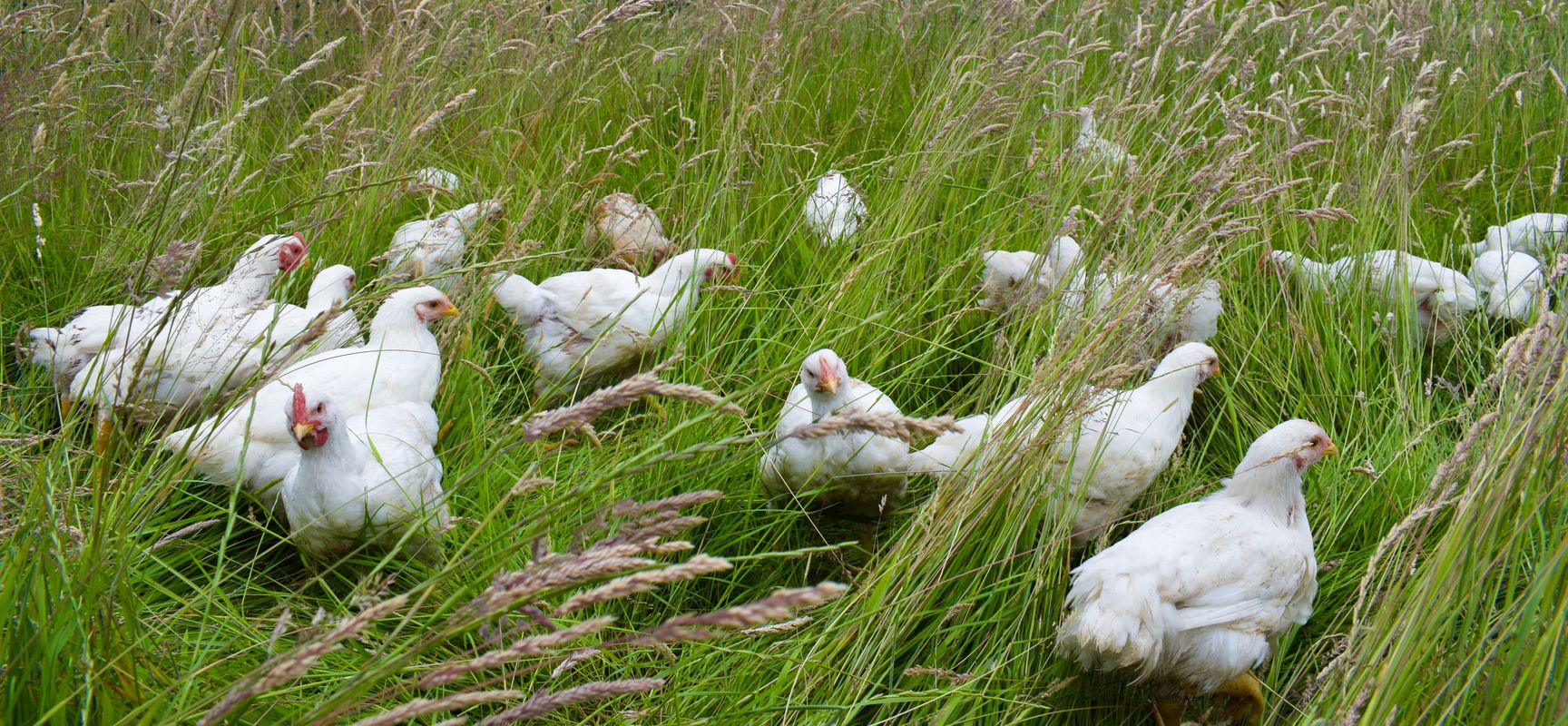
Pasture-raised, GM-free, soya-free — raised by me, personally, from day one. Daily moves to fresh grass, constant access to forage, and as long as it takes to grow properly instead of the 4 weeks it takes conventionally. This is the one I’m proudest of, because I control every part of it.
And because every animal is on rotational pasture, the land underneath them isn’t just surviving — it’s recovering. Healthier soil, more biodiversity, more carbon staying where it belongs. It’s not a separate initiative from the meat. It’s the same practice, seen from two angles.
Moved to fresh grass every morning.
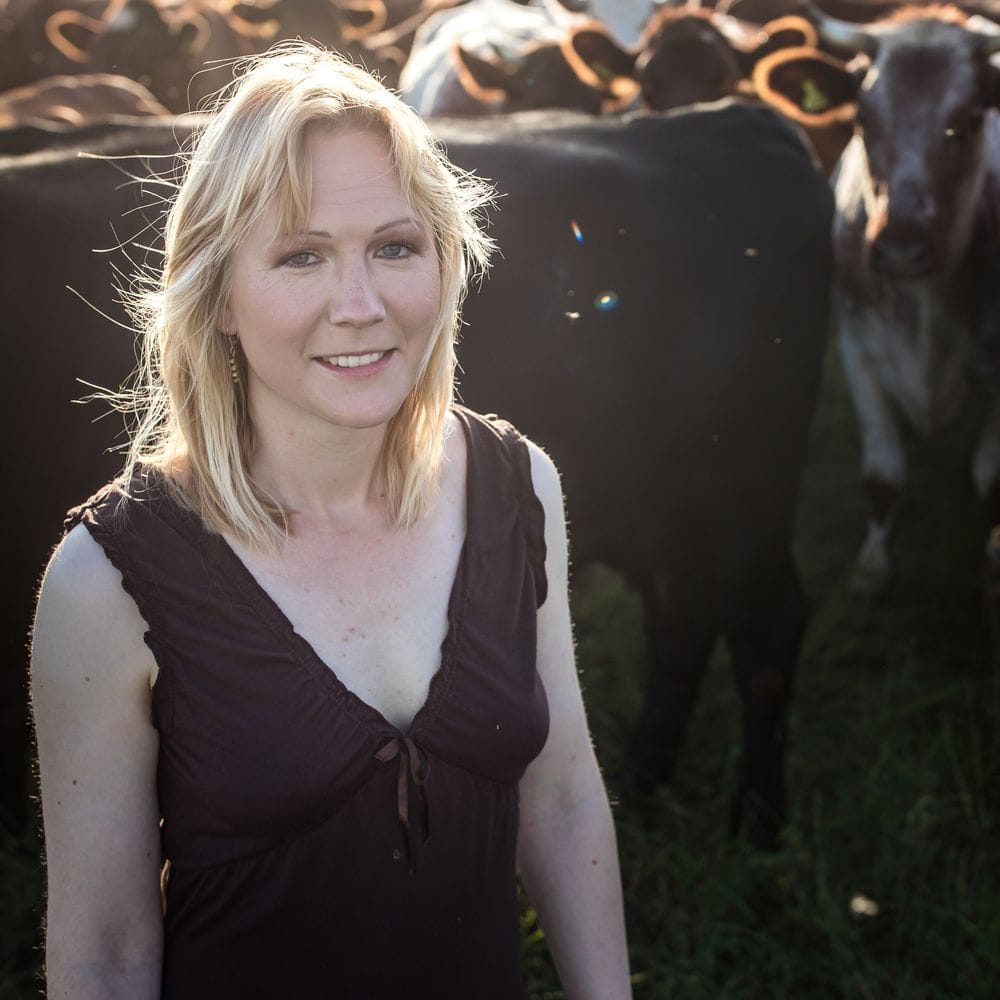
I didn’t grow up on a farm. I started this because I was the customer first — trying to work out why certain meat made me feel unwell, and slowly realising the answer wasn’t in any label I could buy. So I went looking for it myself: the field, the pasture, the actual conditions an animal lives in. Eventually I stopped looking for a farm to trust and became the person doing the raising.
Today I manage every part of this business myself — I raise the chickens, do the butchery, pack every box, and I’m the person who answers when you call or email. That’s not a scale I’ll keep forever, but right now it means I can tell you, honestly, exactly what you’re eating and where it came from, because I was there for all of it.
If you’ve struggled to find meat that agrees with you, or you just want to know your family’s food is exactly what it claims to be — I’d genuinely like to hear from you.
Radka Gromnicova
Founder, Nat Way Farm
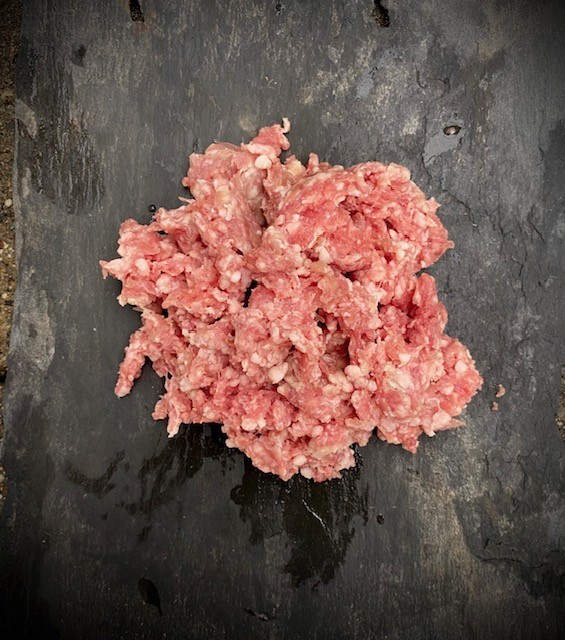
Choose exactly what you want, when you want it — cut by cut, from beef and lamb to pasture-raised chicken. Perfect if you like to pick your own selection or you’re trying us for the first time.

A regular box of our best cuts, delivered on a schedule that suits you — mostly monthly, but flexible if your household needs adjusting. No thinking about it, no running out, and it’s the way most of our long-term customers eat with us.
Already know exactly what you order, every time? Ask about Your Regular Box — a fully personal arrangement, built around your usual selection.
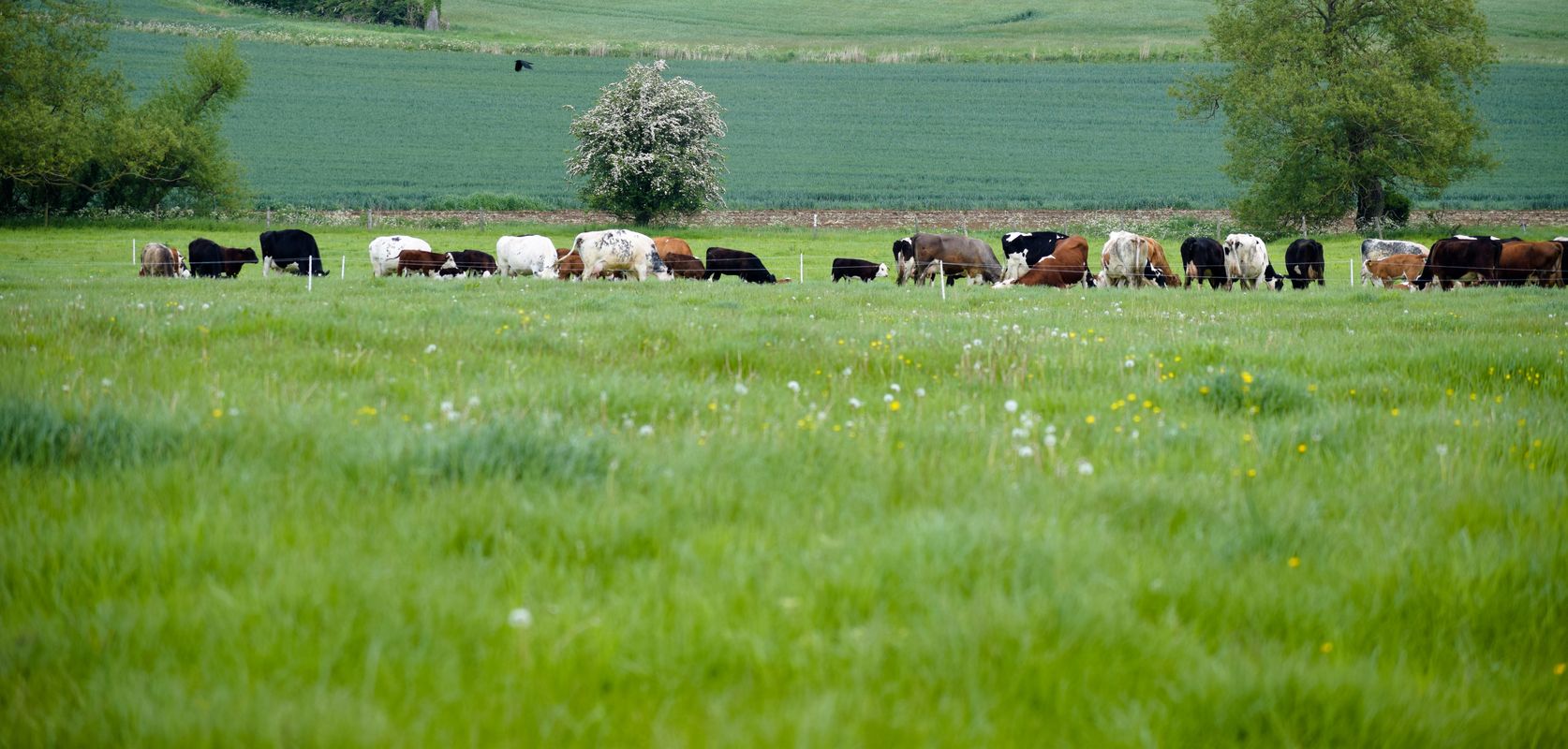
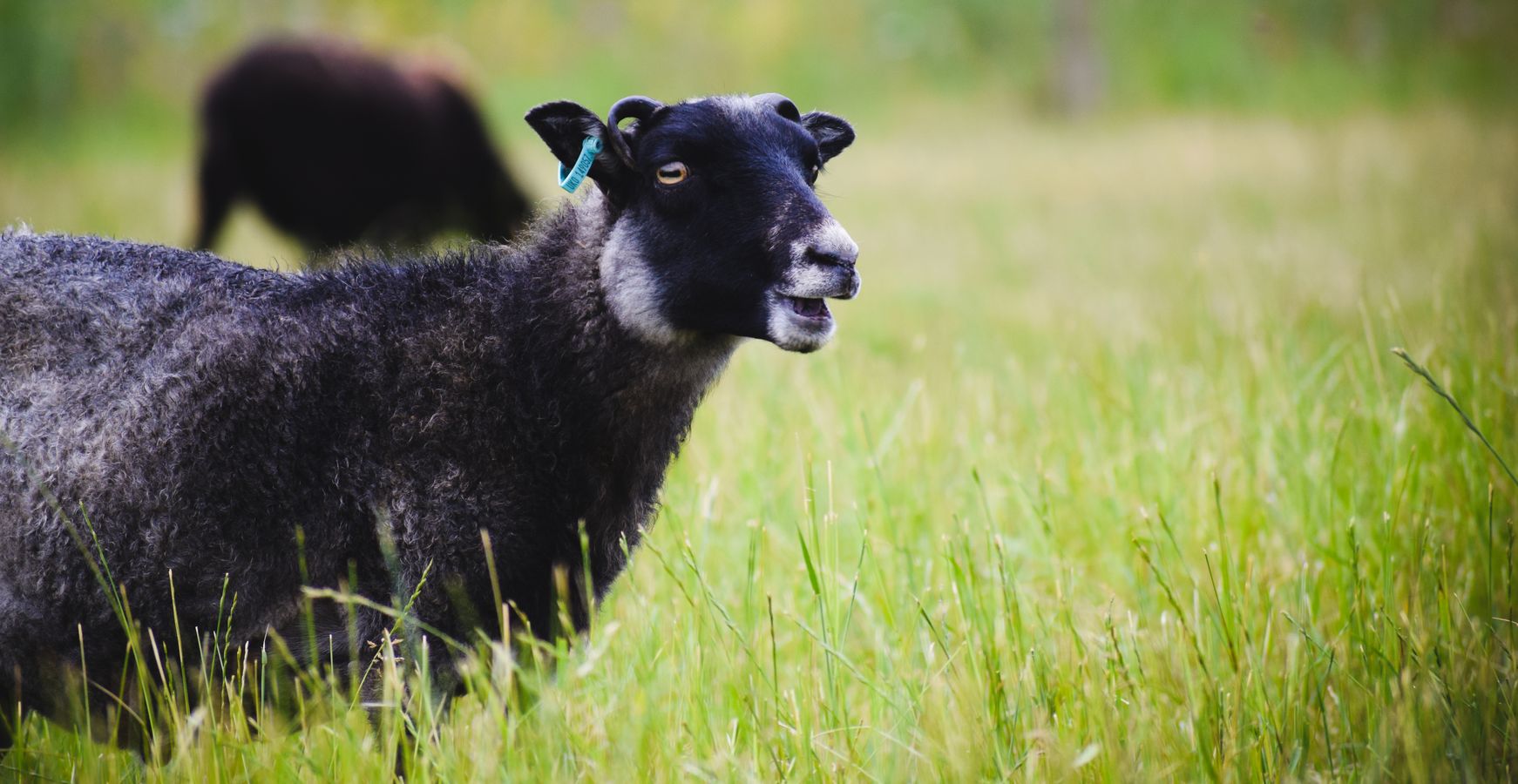
If you’re nearby, you can have your meat delivered fresh, know exactly which field it came from, and even visit. Local delivery is free across Milton Keynes and the surrounding villages.
If you’re further away, our meat travels well — carefully packed and delivered frozen by courier across the UK. A growing number of our nationwide customers come to us specifically because supermarket meat wasn’t working for them, and ours does.
Either way, you’re not buying from a supply chain. You’re buying from one small farm, and one person who can answer exactly what you ask.
“The quality of the meat is 2nd to none and the recipes provided are so inspiring.”
Rebecca — Cosgrove
“Can’t speak highly enough of the quality of the meat, the personal service and the ethos.”
Maureen R
“You can tell the animals have had a healthier life. The beef is dense and firmer.”
Andrew Butler — Verified customer
“I had forgotten how decent meat should taste. This was simply a revelation.”
Robert Stroud
“Everything Radka has done is well just amazing, I don’t think she could do a better job!”
Sandra Shaw
Every rotation of animals across our pasture does two jobs at once: it feeds them properly, and it rebuilds the soil underneath. Roots grow deeper. Carbon stays in the ground instead of the atmosphere. Insects, birds and wildflowers come back to fields that would otherwise sit empty or over-farmed.
This isn’t a claim we make to sound good. It’s the actual mechanism behind why the meat tastes and behaves differently — healthy land produces healthy animals, and healthy animals produce meat your body recognises as food.
Whether you’re managing a health condition, feeding a family, or just done with meat that doesn’t tell you the truth — start with a box, and see how it feels.
Questions before you order? Email me — I read and answer myself.
As a calf, it is fed 100 kg of feed in a creep feeder:
60 kg barley
14 kg soya
23.5 kg sugar beet
growing steer (for 100 days) ratio:
350 kg barley
30 kg rapeseed
finishing steer (for 80 days)
600 kg barley
TOTAL feed per steer:
1010 kg barley
30 kg rapeseed
14 kg soya
23.5 kg sugar beet
Source: AHDB
Pesticide figure based on yearly application of pesticides on barley in 2018 (based on application to 0.17 ha that would produce 1 tonne of barley):
spring and winter barley were mixed in equal ratio for simplicity.
Pesticides in spring barley:
157.5 g
Pesticides in winter barley:
307.5 g
TOTAL 465 g of pesticides = to litres it is about 465 ml of pesticides per year.
Source: Pesticides usage survey 284 for arable crops in the United Kingdom 2018 (National Statistics)
Fertilizer figure (based on application to 0.17 ha that would produce 1 tonne of barley):
nitrogen: 24.14 kg
phosphate: 4.59 kg
potash: 5.95 kg
sulfur: 5.95 kg
TOTAL 40.63 kg of fertilizers
Source: British survey of fertilizer practice for 2018 (DEFRA)